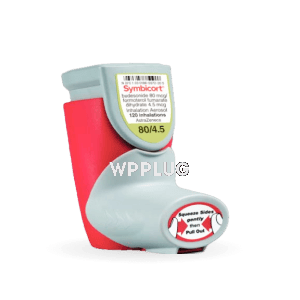
Symbicort
| Product dosage: 100 mcg + 6 mcg | |||
|---|---|---|---|
| Package (num) | Per inhaler | Price | Buy |
| 1 | $46.00 | $46.00 (0%) | 🛒 Add to cart |
| 2 | $36.50 | $92.00 $73.00 (21%) | 🛒 Add to cart |
| 3 | $32.00
Best per inhaler | $138.00 $96.00 (30%) | 🛒 Add to cart |
| Product dosage: 200 mcg + 6 mcg | |||
|---|---|---|---|
| Package (num) | Per inhaler | Price | Buy |
| 1 | $50.00 | $50.00 (0%) | 🛒 Add to cart |
| 2 | $45.50 | $100.00 $91.00 (9%) | 🛒 Add to cart |
| 3 | $41.00
Best per inhaler | $150.00 $123.00 (18%) | 🛒 Add to cart |
| Product dosage: 400 mcg + 6 mcg | |||
|---|---|---|---|
| Package (num) | Per inhaler | Price | Buy |
| 1 | $55.00 | $55.00 (0%) | 🛒 Add to cart |
| 2 | $50.00 | $110.00 $100.00 (9%) | 🛒 Add to cart |
| 3 | $44.00
Best per inhaler | $165.00 $132.00 (20%) | 🛒 Add to cart |
Synonyms | |||
Symbicort Turbuhaler 60md: Advanced Dual-Control for Asthma and COPD
Symbicort Turbuhaler 60md is a combination inhaled corticosteroid and long-acting beta2-agonist (ICS/LABA) designed for the maintenance treatment of asthma and chronic obstructive pulmonary disease (COPD). It delivers consistent bronchodilation and anti-inflammatory action directly to the lungs, reducing exacerbation frequency and improving lung function. This dry powder inhaler device ensures reliable dosing with each inhalation, supporting long-term respiratory management in appropriate patient populations under medical supervision.
Features
- Contains budesonide (inhaled corticosteroid) and formoterol (long-acting beta2-agonist)
- Delivers 60 metered doses per inhaler
- Dry powder formulation without propellants
- Turbuhaler device with dose counter for tracking remaining medication
- Pre-metered, multi-dose design
- Requires minimal inspiratory effort for effective drug delivery
Benefits
- Provides dual anti-inflammatory and bronchodilator effects in a single inhaler
- Reduces frequency and severity of asthma and COPD exacerbations
- Improves lung function measurements (FEV1) within minutes
- Enhances overall quality of life through better symptom control
- Offers convenient twice-daily dosing regimen
- Features a dose counter to help monitor medication supply
Common use
Symbicort Turbuhaler 60md is indicated for the regular treatment of asthma where combination therapy is appropriate, specifically for patients not adequately controlled with inhaled corticosteroids and “as-needed” short-acting beta2-agonists. It is also approved for symptomatic treatment of patients with severe COPD (FEV1 < 50% predicted normal) and a history of repeated exacerbations, who have significant symptoms despite regular bronchodilator therapy. The medication is intended for maintenance therapy and should not be used for immediate relief of acute bronchospasm.
Dosage and direction
For asthma treatment: The recommended dose is 1-2 inhalations twice daily. The maximum recommended dose is 4 inhalations twice daily. For COPD treatment: The recommended dose is 2 inhalations twice daily. Patients should rinse their mouth with water after inhalation to reduce the risk of oropharyngeal candidiasis. The Turbuhaler should be held upright during loading and administration. Twist the grip fully in one direction and then back until it clicks to load a dose. Breathe out gently away from the mouthpiece, place lips firmly around the mouthpiece, and inhale deeply and forcefully. Hold breath for approximately 10 seconds if possible.
Precautions
Patients should be instructed to seek medical attention if their asthma or COPD worsens unexpectedly. Systemic effects of corticosteroids may occur, particularly at high doses prescribed for prolonged periods. Caution is advised in patients with tuberculosis, fungal, viral, or bacterial infections. Patients should be monitored for increased intraocular pressure, cataracts, and glaucoma with long-term use. Hypokalemia may occur potentially leading to adverse effects; serum potassium levels should be monitored in susceptible patients. Be aware of possible paradoxical bronchospasm; discontinue immediately if it occurs.
Contraindications
Hypersensitivity to budesonide, formoterol, or any component of the formulation. Not indicated for the relief of acute bronchospasm. Should not be used more frequently than recommended or at higher doses than prescribed. Not recommended as the sole initial treatment for patients with rapidly deteriorating asthma. Contraindicated in patients with known or suspected quinidine hypersensitivity. Not for use in children under 6 years of age.
Possible side effects
Common side effects (≥1/100 to <1/10) include headache, palpitations, tremor, oropharyngeal candidiasis, hoarseness/dysphonia, and cough. Uncommon side effects (≥1/1,000 to <1/100) may include tachycardia, muscle cramps, anxiety, nausea, dizziness, sleep disturbances, and skin reactions. Rare side effects (<1/1,000) include angioedema, anaphylactic reactions, cardiac arrhythmias, hyperglycemia, hypokalemia, and psychiatric symptoms including behavioral changes. Long-term use may be associated with systemic corticosteroid effects such as adrenal suppression, reduced bone mineral density, and growth retardation in children.
Drug interaction
Beta-blockers may antagonize the effects of formoterol and produce severe bronchospasm in asthmatic patients. Concomitant treatment with quinidine, disopyramide, procainamide, phenothiazines, antihistamines, MAOIs, and TCAs may prolong the QTc interval and increase the risk of ventricular arrhythmias. Concomitant administration with other beta-adrenergic drugs may potentiate the sympathetic effects of formoterol. Ketoconazole and other potent CYP3A4 inhibitors may increase plasma levels of budesonide. Diuretics and xanthine derivatives may enhance the hypokalemic effect of beta2-agonists.
Missed dose
If a dose is missed, it should be taken as soon as remembered unless it is nearly time for the next dose. Do not double the dose to make up for a missed one. Patients should maintain the regular dosing schedule and not take extra inhalations. If uncertain about proper dosing, patients should contact their healthcare provider for guidance.
Overdose
Overdose may lead to symptoms consistent with beta2-agonist overdose including tachycardia, arrhythmias, tremor, headache, muscle cramps, nausea, vomiting, hyperglycemia, hypokalemia, and hypotension. Excessive corticosteroid exposure may cause systemic effects. Symptomatic and supportive treatment is recommended. Cardiac monitoring is advised in cases of significant overdose. Consider discontinuation of Symbicort and institute appropriate symptomatic therapy as required.
Storage
Store at room temperature (15-30°C/59-86°F) in a dry place. Keep the Turbuhaler in the moisture-protective foil package until first use. After opening, keep the cap tightly closed. Do not store in damp places such as bathrooms. Do not expose to temperatures above 50°C. Keep out of reach of children. Discard the inhaler when the dose counter shows zero or 3 months after removal from the foil, whichever comes first. Do not attempt to take the inhaler apart.
Disclaimer
This information is provided for educational purposes only and does not constitute medical advice. Symbicort Turbuhaler 60md is a prescription medication that should be used only under the supervision of a qualified healthcare professional. Patients should not adjust their dosage or discontinue treatment without consulting their physician. The complete prescribing information should be consulted before initiating therapy. Individual results may vary, and not all patients will experience the same benefits or side effects.
Reviews
Clinical studies demonstrate that Symbicort Turbuhaler provides significant improvement in lung function and asthma control compared to monotherapy with inhaled corticosteroids alone. In COPD patients, it has shown reduction in exacerbation rates and improvement in quality of life measures. Many patients report better symptom control and reduced rescue medication use. Healthcare providers note the convenience of combination therapy and the reliable dosing mechanism of the Turbuhaler device. Some patients report initial difficulty with the inhalation technique, which typically improves with proper training and demonstration.